
Console Tables: A Buyer's Guide to Wood That Actually Lasts
So you've decided you want a console table. Maybe you spotted one in a magazine, or you walked past a gorgeous entryway and thought, "I need that in my home." Whatever brought you here, welcome! But before you pull out your wallet, there's one thing most buyers overlook until it's too late: the wood.
Not all console tables are built the same, and the material makes all the difference between a piece that becomes a family heirloom and one that warps, wobbles, or falls apart within a few years. With so many options out there, it can feel overwhelming, especially if you're new to furniture shopping.
That's exactly why we put this guide together. We're breaking down the most popular wood types used in console table construction, explaining what makes each one durable (or not), and helping you figure out which option actually fits your space, budget, and lifestyle. By the end, you'll shop with confidence instead of just crossing your fingers and hoping for the best. Let's get into it!
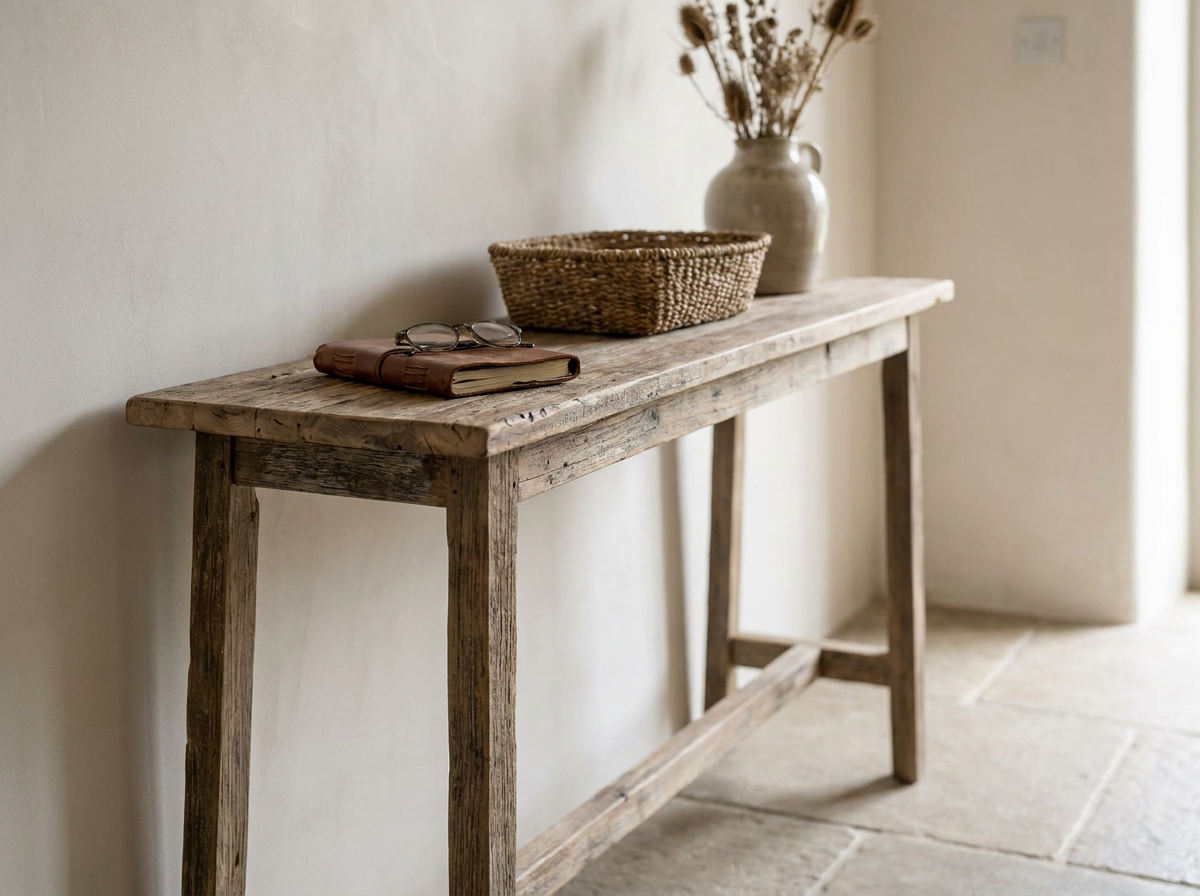
What Makes a Console Table Worth Buying
Most people buy a console table because it looks good in a photo. Then it arrives, wobbles a little, chips after six months, and ends up holding a plant in the garage. That story is more common than it should be, and it almost always traces back to one thing: buying without knowing what you're actually buying.
A console table is narrow by design, typically 10 to 18 inches deep and around 30 inches tall. Those proportions make it genuinely useful in spots where nothing else fits. Interior designers consistently point to four placements that surprise first-time buyers: the entryway, behind the sofa, down a hallway, and as a slim sideboard alternative in a dining room. Most buyers only picture one of these when they shop. The table they end up with can serve all four, depending on the home.
Material is where most buying decisions go quietly wrong. Solid wood, whether black walnut, oak, or pecan, can be sanded down, refinished, and repaired years from now. MDF swells when it gets humid. Particleboard crumbles at the corners. Veneer over plywood looks fine in a showroom and starts lifting at the edges within a few years. The difference is not just cosmetic; it is structural. A well-built solid wood console table genuinely improves with age, developing character in the grain that no composite material can replicate.
The numbers back up this shift in how people think about the category. The global console table market was valued at USD 6.2 billion in 2024 and is projected to reach USD 10.5 billion by 2033. That growth is not being driven by cheap, trend-chasing volume. It is being driven by buyers who want something premium and specific to their space.
People are no longer treating the console table as filler. It has become a genuine design statement, the first thing guests see, the piece that sets the tone for an entire room. That shift raises the stakes for getting the material and the craftsmanship right from the start.
Wood Species and What They Actually Look Like
Not every wood species gets the same spotlight. But when you're choosing a console table, the species you pick shapes everything: color, texture, how the piece feels in a room, and honestly, how long it'll last. Here's a breakdown of the four main species you'll encounter, plus why Texas-grown wood is worth paying attention to.
Black Walnut
There's a reason black walnut keeps showing up in high-end homes and design magazines. The heartwood runs a deep, chocolate brown with hints of purple and grey woven through it. The grain is usually straight, sometimes slightly wavy, and it catches light in a way that makes the table feel expensive without trying. It has real visual weight. Set a walnut console in an entryway and the whole room organizes itself around it. Walnut has become the go-to species for custom furniture makers, and it grows natively right here in Texas, which means Stedman's can source it locally rather than shipping it in from somewhere else.
Pecan
Pecan doesn't get nearly the attention it deserves, and that's a shame. It's actually Texas's state tree, which already makes it interesting from a regional standpoint. The color is lighter than walnut, landing in that warm honey-to-caramel range, and the grain figure is dramatic. You get strong contrast between the lighter sapwood and the darker heartwood streaks, which gives each board a totally unique look. No two pecan slabs are the same. If you want a console table that starts a conversation without leaning into the expected choices, pecan is the quiet confidence move.
Cedar
Cedar plays a completely different game. It's lightweight, which surprises people who expect hardwood to feel heavy. The color is rich and warm, typically a reddish-brown with creamy streaks running through it. And then there's the smell. Cedar has a natural aroma that sticks around for years. It's a rustic species in the best sense of the word. The texture is more varied than walnut or oak, with knots and grain shifts that give it personality. It fits perfectly in farmhouse kitchens, cabin living rooms, and eclectic spaces where a little irregularity is part of the charm.
Oak
Oak is the reliable one. Dense, strong, and available in both red and white varieties, oak has been a furniture staple for centuries because it simply performs. The grain is open and distinctive, which means it takes stain and finish incredibly well. Want a dark espresso tone? Oak handles it. Prefer a light natural finish? Also oak. It's the most forgiving species to work with from a design flexibility standpoint, which is why it shows up in traditional homes, transitional builds, and modern farmhouse interiors alike. If you're unsure what species to choose, oak is almost never the wrong answer.
Why Texas-Grown Actually Matters
Here's something that rarely gets talked about. Wood grown in Texas develops differently than the same species grown somewhere else. The climate is harder, the growing seasons are specific, and the soil conditions vary dramatically across the state. Trees that grow slowly in tougher conditions tend to produce denser, tighter grain. That means more character, better stability, and a finished piece that carries a real story tied to this place. Imported or generic domestic lumber doesn't bring that to the table. Regionally sourced Texas hardwood does, and it's one of the things that makes a custom piece from a Texas sawmill genuinely different from anything mass-produced.
Live-Edge vs. Straight-Edge: Which One Fits Your Space
There's a decision hiding inside every console table purchase that most people don't think about until it's too late. It's not about color or price. It's about the edge. And honestly, once you understand the difference, everything else clicks into place.
Live-Edge: When the Tree Gets to Keep Its Story
A live-edge console table is exactly what it sounds like. The natural outer silhouette of the tree stays intact through the milling process. The curves, the gentle dips, the organic movement along the slab's border, all of it remains. Bark gets removed, but the shape of the tree? That stays. No two slabs ever look alike, which isn't a quirk; it's the whole point.
This style works best when the room has breathing room. Think open entryways, wide foyer walls, or living spaces built around natural textures, warm tones, and organic materials. Live-edge thrives when it's allowed to be the focal point. Pair a black walnut slab with a clean steel base and you've got something that feels both raw and polished at the same time. It doesn't compete with the room. It anchors it. According to CS Woods, live-edge works best as a single statement piece in spaces with nature-forward styling, and that tracks with how most designers actually use it.
Straight-Edge: Clean Lines, Zero Drama (In the Best Way)
Straight-edge console tables get trimmed square on both sides during milling. The result is a symmetrical, geometry-forward profile that plays nicely with tight hallways, minimalist rooms, and spaces where you need the furniture to support the room rather than redirect attention toward itself. Narrow entryways especially benefit here. A straight-edge piece in a 12-inch-deep hallway console sits against the wall and disappears into the design. That's not a flaw. In many rooms, that's exactly the job.
Waterfall-Edge: The Option That Changes the Whole Conversation
Then there's the waterfall edge. This is where the wood grain flows continuously from the tabletop and wraps over the side panel without any interruption or seam. The grain matches, corner to corner. It takes serious skill to pull off and represents some of the most refined work happening in custom furniture right now. It's not rustic. It's not minimal. It sits in its own category entirely.
The Room Decides, Not You
As Stumptown Reclaimed Wood puts it, this choice isn't really about personal preference in isolation. It's about reading the room first, then choosing the edge style that serves it. A live-edge slab in a tight, angular hallway creates tension. A straight-edge table in a wide, texture-rich entryway can feel a little lifeless. The right answer changes with every space. That's exactly why this conversation should happen before a single cut is made.
How to Pick Your Slab (The Part Nobody Talks About)
Picking a live-edge slab for a console table is genuinely one of the best parts of the whole process. It's also the part where most people freeze up, second-guess everything, or just point at the prettiest piece and hope for the best. A little knowledge here goes a long way.
1. Grain Direction Sets the Whole Mood
Look at the grain before you look at anything else. Cathedral grain, those sweeping arched lines that rise and dip like a mountain range, pulls your eye across the surface and creates real visual energy. It makes a statement. Straight grain does the opposite; it's quieter, more composed, and works beautifully in formal entryways or minimalist spaces. Neither is better. They just do different things. A console table sits at eye level in a high-traffic spot, so whatever the grain is doing, people are going to see it up close. That's worth thinking about before you commit.
2. The Edge Is More Personal Than You'd Expect
Two black walnut slabs cut from the same log can look completely different along the edge. One might be gently curved and smooth, almost elegant. The next could be deeply wavy with small knots tucked into the bark pocket, full of character. According to Live Edge Slabs 101, natural features vary significantly even within the same species, which means your options are genuinely wide open. For a console table specifically, that edge faces the room. It's front and center. So deciding what kind of personality you want your table to have is actually a meaningful question, not a small one.
3. Measure Your Wall Before You Fall in Love
This one saves a lot of heartbreak. A slab that looks perfectly proportioned leaning against a shed outdoors can feel enormous inside a 36-inch entryway. Console tables typically run between 12 and 18 inches deep, and width should sit a few inches shorter than the wall it anchors. Bring your measurements to the yard. Write them on your phone. A piece that fits beautifully is always more satisfying than a piece that's just stunning in isolation.
4. Voids and Cracks Are the Interesting Parts
Seriously. A crack running through a slab isn't a flaw; it's an invitation. Selecting and processing live-edge wood explains that epoxy resin fills these voids brilliantly, creating contrast that plays off the surrounding grain in ways that feel intentional and modern. Experienced woodworkers actually seek out slabs with cracks, checks, and small voids specifically because the epoxy fill becomes a design feature all its own. A little color contrast in the right crack can turn an already-beautiful piece into something genuinely striking.
5. In-Person Selection Changes Everything
A catalog photo shows you a slab. Standing next to one tells you something completely different. You notice the weight of it, the color shift from heartwood to sapwood, the way the grain catches light from different angles. As Berkshire Products notes, even with size and species filters, online shopping only gets you so far. You're not picking a product. You're picking a piece of a specific tree, one that grew in a specific place, for decades. That connection is real, and it shows in the finished table sitting in your home.
Why Kiln-Dried Wood Is Non-Negotiable for Console Tables
Here's the thing most furniture buyers never think to ask: how dry is this wood?
It sounds like a strange question. But the answer explains why some tables last thirty years and others start cupping and cracking before you've even finished decorating around them.
Wood is a living material, even after it's been cut. It constantly pulls moisture in from the air and releases it back out depending on the conditions around it. If a piece of furniture gets built before that movement stops, the wood keeps moving after construction. Joints separate. Tops bow. Cracks appear along the grain. None of that is a defect in the traditional sense. It's just physics, and the only real fix happens before the first cut.
Kiln drying is exactly what it sounds like. The lumber goes into a controlled chamber where temperature, airflow, and humidity are carefully managed to pull moisture out of the wood at a steady, even rate. It's not fast heat. It's not just leaving boards out in the sun. The process works in stages, and furniture-grade hardwood typically gets dried down to around 6 to 8 percent moisture content before it's ready to build with. At that level, the wood has settled. It's stable. You can learn more about why kiln-dried wood matters for furniture quality and why this single variable separates well-built pieces from problematic ones.
Now think about a Texas home in July. The AC runs basically nonstop. Indoor air gets dry, significantly drier than outside. When you bring furniture made from improperly dried wood into that environment, the wood reacts immediately. It starts shedding moisture to match the dry interior air, and as it does, it shrinks. The top pulls away from the apron. A drawer stops closing cleanly. A hairline crack shows up right down the center of a beautiful walnut slab. This can happen within the first year of ownership, sometimes faster. Kiln-dried lumber is already conditioned to live in that kind of environment. It doesn't fight your HVAC system. It just sits there, quiet and stable, doing exactly what furniture is supposed to do.
This is also the invisible difference between a $300 mass-market console table and a $1,800 handcrafted hardwood piece. Mass-market manufacturers rarely disclose drying methods, and that silence tells you something. Premium builders lead with it. Understanding what kiln-dried wood actually is helps clarify why it's standard in serious furniture making and why skipping it cuts corners that eventually show up in the piece itself.
One more thing worth knowing. Kiln drying isn't only a production process. It's also a service. At Stedman's, customers can bring in their own logs, whether that's a black walnut tree that came down in a storm, a pecan pulled from the back of the property, or a cedar they've been saving for something specific. That wood gets milled and then dried in the kiln before it ever becomes furniture. The result is a piece where the customer knows exactly where every plank came from. That's a different level of ownership than anything a catalog can offer.
Base Options and How They Change the Whole Look
People spend a lot of time obsessing over the slab. The grain, the color, the natural edge. And yes, all of that matters. But the base is quietly doing just as much work, and most buyers don't realize it until the table is already in their entryway looking slightly off and they can't figure out why.
Here's the honest breakdown of what each base option actually does to a finished piece.
Hairpin Legs: Get Out of the Way (In the Best Way)
Steel hairpin legs are slender, two-rod legs bent at a single angle. They come from mid-century industrial design, and they've stuck around because they're genuinely useful. The silhouette stays open and airy. The slab gets all the attention. If you have a beautiful piece of black walnut with dramatic grain, hairpin legs are what let that grain breathe without competition. They keep the whole table feeling light and modern, which works especially well in smaller entryways where visual clutter builds fast.
Welded Box and Trestle Bases: When the Slab Needs Company
A wide live-edge slab sitting on hairpin legs can look a little top-heavy. That's where welded steel box bases or trestle-style frames come in. They add visual mass underneath, grounding the piece and creating that contemporary-rustic hybrid feel that's all over custom furniture right now. The base becomes part of the composition rather than just a support structure. Wide pecan or walnut slabs especially benefit from this kind of presence underneath them.
Solid Wood Bases: Warmth All the Way Through
A solid wood base, whether it matches the top species or offers a subtle contrast, gives the whole table a sense of continuity. Think full warmth, clean lines, a leaning-toward-Scandinavian feel if the profile is simple. It reads more traditional but never fussy when the proportions are right.
The Finish Is a Design Decision Too
Right now, polished brass and blackened steel are the two finishes showing up most in quality custom work. Brass feels warm and a little sculptural. Blackened steel reads graphic and deliberate, like the base was chosen with intention. Both are strong; they just set completely different moods.
And here's the part worth remembering: the base accounts for roughly a third of how the finished piece reads in a room. It's not a footnote. Think about the table and the space together, because the right slab on the wrong base still lands flat.
Console Table Sizing Guide: Getting the Dimensions Right
Size matters more than most people think. You can find the most stunning slab of black walnut on the planet, pair it with a perfect steel base, and still end up with a piece that looks completely wrong in your space simply because the numbers were off. Let's fix that before it happens.
Height: Start Here
Standard console table height runs between 28 and 32 inches, and where you land in that range actually changes the feel of the whole room. Taller pieces near 32 inches carry a more formal, structured energy. They work well alongside adjacent seating or in entryways where you want the table to command attention. Shorter profiles in the 28 to 30 inch range feel more relaxed and modern, which suits rooms with low-profile sofas or contemporary furniture that sits close to the ground.
Depth: The Number Everyone Gets Wrong
This is where most buyers make their mistake. Depth between 12 and 15 inches is the sweet spot for entryway use. You get enough surface for a lamp, a small bowl, maybe some keys, without the table jutting out into your path every time you walk through. Bump that up to 18 inches and the whole styling game changes. You get room for layered objects, a stack of books, a trailing plant. It feels generous without feeling like a shelf.
Width: Let the Wall Breathe
A good rule of thumb is to keep your console table no wider than two-thirds of the wall it's sitting against. This keeps the piece from feeling like it's fighting the room for space. It also frames the table visually, giving your eye somewhere to rest on either side. Retail pieces typically run from 30 to 72 inches wide, so there's usually something close, but "close" is not the same as right.
Behind the Sofa: Depth Gets Critical
Placing a console behind a sofa is one of the best design moves in a large living room. But keep the depth under 14 inches. Go deeper and the table starts crowding the back of the seat cushions, which subtly changes how people sit and how the room flows.
When Nothing Off the Shelf Works
Narrow hallways in Texas ranch-style homes are a genuinely specific problem. Corridor widths sometimes fall below 36 inches, and standard retail depth options simply do not work. Too deep and you block the hall entirely. Too short and the piece looks undersized against a long, low wall. This is exactly the situation where a custom mill-to-furniture operation earns its place. At Stedman's, we can mill a slab to whatever depth your hallway actually needs, kiln dry it properly, and build it into a finished piece built for your space, not a median room that exists in a catalog.
Custom vs. Off-the-Shelf: What You're Actually Paying For
Let's be honest about something. The price tag on a custom console table can feel like a gut punch at first glance. But that number is telling you a story, and it's worth actually reading it before you scroll past.
Every dollar in a handcrafted piece traces back to a specific decision someone made by hand. The slab was sourced from a real tree, milled to a specific thickness, kiln-dried until the moisture content was dialed in, surfaced and sanded through multiple grits, joined with methods designed to hold for decades, finished with coats that protect the wood instead of just coating it, and fitted with a base built to match that exact piece. None of that is accidental. None of it is automated. Custom furniture pricing reflects real material costs and real labor time, not a retail formula applied to a product engineered for volume.
Mass-market furniture works differently. It starts with a target price and works backward. That means thinner veneers over MDF cores, stapled or pocket-screwed joinery instead of mortise-and-tenon, and surface finishes that look great in a product photo but start showing wear within a few years. The trade-offs are real, and they compound. A joint that flexes slightly when new becomes a wobble by year three and a crack by year six. That's not a defect. That's the math of building to a price point rather than a quality standard.
Here's the reframe that actually changes how people think about this. A 20-year cost-per-year comparison almost always favors solid hardwood. A $1,400 custom black walnut console table that lasts 40 years costs you about $35 per year. A $400 manufactured piece you replace twice in that same window costs more, and it never becomes an heirloom. Well-built hardwood furniture has outlasted entire houses. That's not marketing language. That's just what happens when wood is properly dried, properly joined, and properly finished.
The ROI math gets even more interesting when you add resale value and timeless style into the equation. Real wood develops patina. It earns character. A live-edge walnut console table from a Texas sawmill looks better at year ten than it did at year one. Handcrafted furniture ages with integrity in ways factory pieces simply cannot replicate, and that's increasingly recognized by interior designers and homeowners who are buying for the long term.
Then there's the part no warehouse can offer: actual customization. With a custom build, you choose the species. You walk the slab yard and pick the exact board. You specify the edge profile, the base style, the finish, and the exact dimensions that fit your entryway or your hallway or the wall behind your sofa. None of that exists when a company ships 10,000 units a month. You get what fits the box, not what fits your home.
From Tree to Table: How the Process Actually Works
Most furniture arrives as a finished object. You order it, it shows up, and you have no idea what it was before the box. That's fine for some things. For a console table meant to anchor your entryway for the next thirty years, it's worth understanding where the wood actually came from and what happened to it along the way.
The full journey looks something like this. A log gets evaluated for species, grain pattern, and structural integrity. Then it goes through the sawmill, where it's opened up into slabs. Each cut reveals something new; the figure in the grain, a mineral streak, a beautiful cathedral pattern nobody expected. From there the slabs move into the kiln, where moisture gets drawn out slowly and evenly until the wood is stable enough to hold its shape as furniture. Surface prep follows, which is where skilled hands flatten, plane, and match grain across the top. Then comes design, fabrication, and finishing. Seven distinct stages, all connected, all happening with the same piece of wood.
What makes a sawmill-based operation genuinely different is that all of this can happen in one place. You're not sourcing a slab from one supplier, shipping it somewhere to dry, and sending it to a third shop for fabrication. The chain is unbroken.
Your Own Tree Can Become That Table
Here's something most people don't know is even an option. If you have a black walnut, a pecan, or an oak on your property that came down in a storm, that tree can become a finished console table. You bring the log in, and the process starts right there. The wood you already own gets milled into slabs, kiln dried, and built into something real. That's not a metaphor. It's a practical service.
No catalog brand can tell that story because they don't have a sawmill. They sell objects. A custom sawmill-based maker sells a process, and the finished piece carries every step of it inside the grain.
That kind of transparency is increasingly what buyers are searching for. People want to know where things come from. A console table with a real origin, a real tree, a real place, holds weight that manufactured furniture simply never will.
The Bottom Line on Console Tables
Real wood wins. That's the short version. A console table built from properly dried hardwood, something like black walnut or pecan sourced right here in Texas, doesn't just hold up. It mellows, deepens, and becomes more itself over time in a way that no factory finish can fake.
Before you commit to anything, think about the room's feeling, not just its color palette. Walnut reads moody and sophisticated. Oak feels warm and rooted. Cedar brings something lighter and more rustic. Then layer in edge profile and base style, because those two decisions quietly control everything about how the finished piece lands in a space.
Measure your entryway or hallway with zero optimism. Be honest about the depth. If standard sizes don't fit, custom dimensions are always on the table.
If you're drawn to a live-edge piece, please see it in person. Photos genuinely cannot show you how the grain moves, how wide the natural edge swings, or how the slab actually fills a room.
Come by the yard. Ask what's in inventory. The best console table you'll ever own might already be sitting at the mill, waiting for you to find it.
Conclusion
Choosing the right console table comes down to knowing your wood. Hardwoods like oak, walnut, and maple offer lasting durability and timeless appeal, while engineered options can deliver solid value at a lower price point. Always consider your environment, since humidity, sunlight, and daily traffic all affect how a piece holds up over time. And never underestimate the importance of construction quality; even the best wood fails if the joinery is poor.
Now you have the knowledge to shop smart, not just shop pretty. Before your next furniture search, revisit your must-haves, set a realistic budget, and ask the right questions about materials and craftsmanship. The perfect console table is out there waiting for you. Go find one that will still be turning heads decades from now.