
What Is a Sawmill — And What Can One Do for You?
Imagine standing in a forest surrounded by freshly cut timber, watching raw logs transform into smooth, usable lumber right before your eyes. Pretty cool, right? If you've ever wondered how wood goes from a tree in the ground to the planks used in your home, furniture, or backyard projects, then you're in the right place.
A sawmill is the starting point for almost every piece of wood you've ever used, yet most people know surprisingly little about how one actually works or what it can do for them. Whether you're a hobbyist woodworker, a homesteader, or just someone curious about where materials come from, understanding the basics of a sawmill can open up a whole new world of possibilities.
In this post, we're going to break it all down in simple, straightforward terms. You'll learn what a sawmill is, how it works, and the different ways one might actually benefit you in real life. No complicated jargon, no confusing technical details. Just clear, honest information to help you decide if a sawmill deserves a place in your world.
What a Sawmill Actually Does
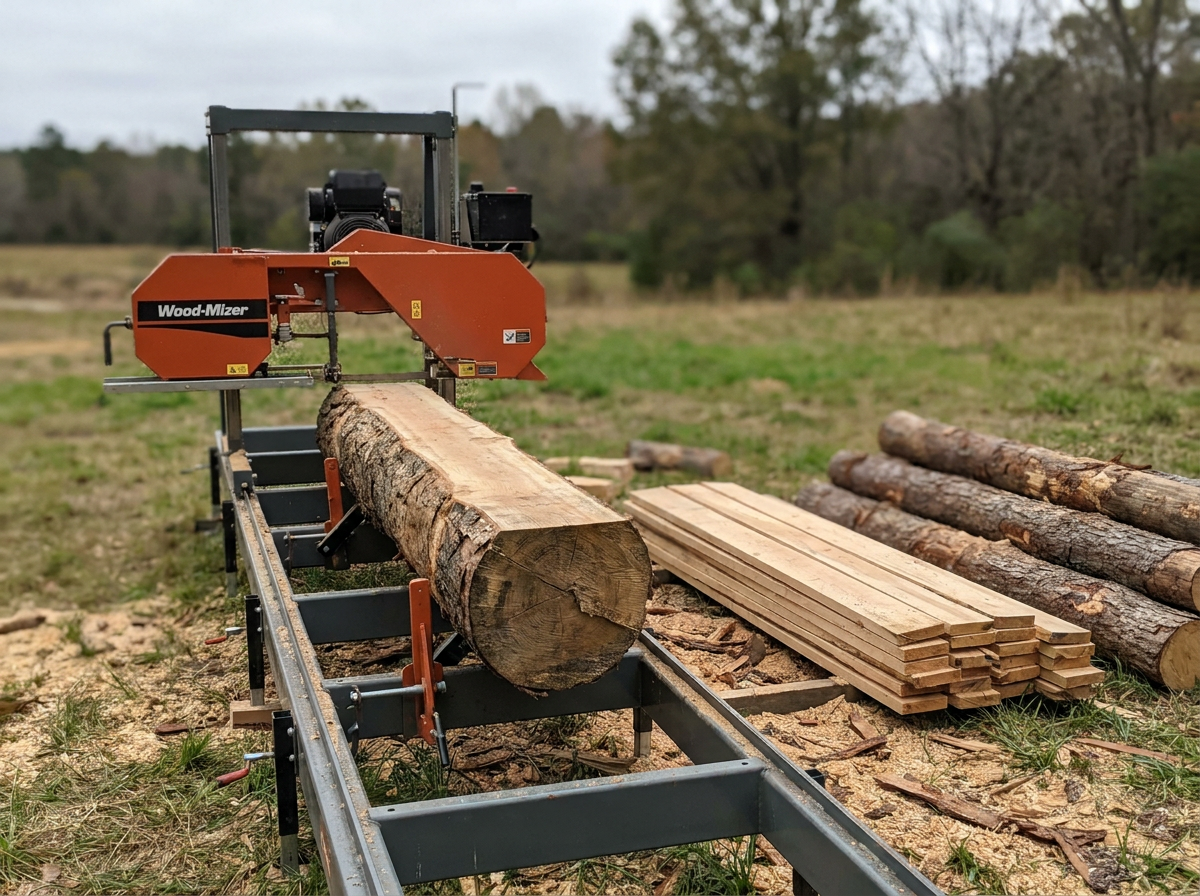
At its core, a sawmill does one thing: it takes a raw log and turns it into something you can actually build with. That sounds simple. But the decisions made during that process, before the blade even touches the wood, determine everything about what comes out the other end.
When a log arrives at the mill, the operator reads it like a map. They're looking at diameter, grain direction, any defects hiding under the bark. From there, they decide how to orient the log and which cut pattern will unlock the most value. A thick black walnut log, for example, could yield flat-sawn boards with bold cathedral grain, quarter-sawn planks with tight straight figure, or a live-edge slab that keeps the natural curve of the tree's outer edge intact. Same tree. Wildly different results. Each cut serves a completely different end use, and each one requires a deliberate choice upfront.
That first-pass decision matters especially for live-edge slabs. To keep the natural edge, the miller has to leave the outer profile of the log untouched, which means sacrificing some yield in exchange for character. The result is a piece that carries the actual shape of the tree, something no factory can replicate.
Cut Types Change Everything
Flat-sawn lumber is the most common method because it produces the most boards per log. Quarter-sawn cuts the log so the growth rings run more perpendicular to the face, producing straighter grain, better stability, and that distinctive ray fleck pattern prized in oak and walnut furniture. Rift-sawn is even more precise, with the most uniform grain of all three, though it wastes more material. Different sawing methods produce lumber with distinct visual and structural characteristics, which is exactly why appearance-grade custom milling is its own discipline.
Custom vs. Commodity: Two Different Games
Most lumber you see stacked at a hardware store came from a commodity mill. Those operations are built for volume and consistency, turning out standardized dimensional lumber and industrial stock at scale. And that market is huge. Industrial products like pallets, containers, and railway ties now account for roughly 51% of domestic hardwood lumber consumption, up from 39% in 2002. That shift has pushed appearance-grade milling into genuine premium territory.
Custom mills occupy a completely different space. They work with specific species, unusual dimensions, and logs that commodity operations would never touch. A log up to 36 inches in diameter, oversized pecan from a Texas property, a massive cedar with character no box store carries, these are exactly the logs a custom mill is built for. The output isn't generic. It's precise, intentional, and made for a specific project or piece.
The Journey From Log to Lumber
Every log that arrives at a sawmill tells its own story before a single blade touches it. The first step is reading that story carefully. A sawyer walks the log, checking diameter, looking for cracks along the ends, scanning for soft spots that hint at hidden rot. Then comes something most people never think about: a metal sweep. Old fence staples, embedded nails, even bullets can live inside a log for decades. One overlooked piece of metal can destroy a blade instantly, so this step is never skipped. Species identification matters here too, because black walnut behaves very differently under the saw than cedar or pecan. All of this evaluation happens before any cut is planned, because the goal isn't just to make boards. It's to figure out what this specific log wants to become.
One Cut Changes Everything
Once the sawyer decides on a milling plan, there's no going back. That's the part that surprises most beginners. A wide, figured black walnut log might yield a breathtaking 10-foot live-edge slab for a dining table, or it might be broken down into a stack of 4/4 hardwood boards for furniture stock. Both are valuable. But the decision has to be made before the first pass, because the blade doesn't forgive second-guessing. A skilled sawyer sometimes rotates the log between cuts, reading the grain as it opens up, adjusting the plan in real time. A typical mill can process around 1,500 board feet in an eight-hour day, but a single large log demands serious attention. A 24-inch-diameter log can take over an hour to work through properly. Speed isn't the point. The right timing and approach at every stage can be the difference between beautiful lumber and a pile of wasted wood.
Green Lumber Isn't Finished Lumber
Here's something a lot of first-timers don't expect. Fresh-cut lumber, called green lumber, is still full of moisture. It can't go straight into a dining table or a set of kitchen cabinets without drying first. Left to air dry on its own, thick hardwood slabs can take years. Kiln drying speeds that process up dramatically, using controlled heat to pull moisture out evenly without cracking or warping the wood. This isn't an optional upgrade or a luxury add-on. It's a necessary step for any wood headed into a finished interior. A piece of kiln-dried walnut is stable, workable, and ready. A piece of green walnut is still changing, and furniture built from it will move in ways you don't want.
Where the Journey Can End (Or Keep Going)
The path from log to finished product is surprisingly flexible. Some customers want rough-sawn lumber they can take home and work with themselves. Others want surfaced boards, ready for a project. And some want to hand the log over and walk away with a finished dining table, a live-edge bar top, a floating fireplace mantel, or a custom beam. The whole process, from raw log through milling, kiln drying, and custom fabrication, can happen under one roof.
That flexibility matters most for landowners. A storm-felled oak or a pecan tree that came down in last year's drought doesn't have to become mulch. It can be evaluated, milled, dried, and turned into something with real and lasting value, a piece that carries the history of exactly where it came from. That's not just good economics. For a lot of people, it's deeply personal.
Kiln Drying: Why It Matters More Than You Think
Fresh lumber is wet. Not just a little damp, either. A log that just came off the saw can carry moisture content anywhere from 60% to well over 100% of the dry wood's weight. That's not a typo. The water can literally outweigh the wood fiber itself. Think about that the next time someone talks about a "heavy" log. Half of what you're lifting might just be water.
That moisture doesn't stay put. As wood sits in a new environment, it starts releasing water and trying to reach a balance with the air around it. The problem is, wood doesn't do this evenly. The outside dries faster than the inside. The ends lose moisture faster than the middle. When different parts of a board shrink at different speeds, something has to give, and what gives is the wood itself.
What Goes Wrong When Drying Isn't Controlled
Warping, cupping, twisting, checking, these aren't rare outcomes. They're what happens naturally when lumber dries without guidance. Checking means surface cracks, the kind that split along the grain in ways you can't sand away or hide. Internal cracking, called honeycombing, can happen deep inside a thick slab where you won't even see the damage until you're mid-cut on a project. Red oak is a good example of how serious this gets; dried on the wrong schedule, four-quarter red oak comes out of a kiln cracked and essentially useless for anything beyond firewood.
These defects aren't fixable after the fact. You can't un-warp a dining tabletop once it's twisted. This is exactly why how lumber is dried matters as much as which species you choose.
What a Kiln Actually Does
A kiln is a controlled environment, a heated, insulated chamber where temperature, humidity, and airflow are managed precisely to pull moisture out of wood at a safe, steady rate. The goal for furniture-grade hardwood is to reach somewhere between 6% and 8% moisture content, which is roughly the level that matches the dry indoor air inside most homes and commercial spaces. Hit that target, and the wood has nowhere to go; it's already in equilibrium with its environment before it ever becomes a table or a mantel.
Many quality sawmills actually combine two stages: air drying for several months first, then finishing in the kiln for one to two weeks. This staged approach produces fewer drying defects and costs less energy than kiln drying green wood from scratch. The full cycle from fresh-cut log to properly dried lumber typically runs a minimum of four to six months. Quality takes time, and anyone promising much faster than that deserves a closer look.
The Part Nobody Talks About Enough
Moisture isn't the only thing living inside green wood. Fungi, stain organisms, insects, larvae, all of them treat fresh-cut lumber like a free meal. Decay fungi in particular move fast, especially in warm, humid conditions like those across Texas. Kiln drying eliminates insects, larvae, and mold spores by exposing the wood to sustained heat that biological threats simply can't survive. For any wood going into your home, whether it's a live-edge slab countertop, a custom beam, or built-in shelving, this biosecurity function isn't optional. It's the baseline.
Kiln drying has become a recognized processing category in the U.S. sawmill market in its own right, not just a nice-to-have step. Buyers searching for quality hardwood are actively filtering for it. It signals stable, professional-grade material, and skipping it signals the opposite. At Stedman's, kiln drying is part of the process, not an afterthought, because the finished piece is only as good as the material it started from.
What Makes a Custom Sawmill Different
Walk into any big-box hardware store and you'll find lumber. Stacks of it. Neat, uniform, predictable. A 2x4 is a 2x4. The pine is pine from somewhere, dried to somewhere-around-okay, and it'll frame your wall just fine. That's exactly what it's designed for. But if you're building a dining table that your grandkids will fight over someday, or a live-edge kitchen island that stops people mid-sentence when they walk in, that aisle has nothing for you. The wood there was milled for volume, not vision.
It Starts With a Specific Log
Custom sawmill work is fundamentally different because it begins with a particular piece of wood, not a category. Maybe it's a black walnut log with a figure so dramatic it almost looks painted. Maybe it's a pecan tree that came down in your backyard after a storm, and you want it turned into a coffee table instead of hauled off as firewood. Or a cedar beam cut to an exact length and profile to frame a fireplace surround in a specific room. A commodity mill has no mechanism for any of that. A custom mill is built for exactly that.
This matters more than most beginners realize. Wood isn't interchangeable. A slab cut from a specific walnut log will have grain patterns, color, and figure that no other log on earth can duplicate. When you work from a specific log, you're preserving something irreplaceable. When you buy off a retail shelf, you're buying whatever was available.
A Structural Gap, Not a Size Gap
The U.S. sawmill market carries a lot of volume. But the custom and specialty segment has no national dominant player. The market is populated by regional operators, and the gap between what commodity suppliers offer and what a custom mill delivers isn't about who's bigger. It's about a completely different category of service. Pricing discussions among independent sawyers reveal live-edge slabs selling for $50 to $200 depending on species, dimensions, and drying, with one sawyer noting plainly that "nice live edge slabs are worth more than the lumber would bring. You can get the lumber just about anywhere but harder to get a nice live edge slab." That's the whole story right there.
Dimensions That Simply Don't Exist at Retail
Custom mills can produce wood in specifications that retail channels cannot offer. Three-inch-thick walnut slabs. Twenty-foot cedar beams. Quartersawn oak boards in exact widths, cut specifically for their superior stability and distinctive ray-fleck grain. There are four distinct sawing patterns, and each one produces a different look, a different feel, and a different performance profile. A retail aisle gives you one. A custom sawmill gives you a choice.
The Conversation Comes First
Working with a custom sawmill means talking through your project before anything gets cut. What's the end use? What dimensions do you need? What species makes sense? At a place like Stedman's Mill and Lumber Co., that consultative process is built into the work. The result is wood that was milled for your project, not wood that was milled speculatively and sold to whoever happened to need it. That distinction is the entire difference between a piece of furniture and a piece of furniture worth keeping.
Who Actually Uses a Sawmill
The answer is honestly a lot more people than you'd think. A sawmill isn't just for timber companies or old-school loggers. It serves a surprisingly wide range of people, and most of them come to it because they need something they simply cannot find anywhere else.
The Homeowner With a Downed Tree
A big storm rolls through, and suddenly there's a 60-year-old oak lying across the backyard. Most people call a tree service, watch it get chipped into mulch, and feel a quiet sadness about the whole thing. But some homeowners pause and think about what that tree could actually become. A slab for the kitchen island. A mantel above the fireplace. A set of shelves the grandkids will inherit someday. That tree has decades of growth locked inside it, and a sawmill is the only thing standing between it and a woodchipper. For landowners and tree owners especially, converting a storm-damaged tree into something lasting isn't just practical. It's personal.
The Furniture Maker Who Can't Find What They Need
Professional woodworkers and furniture makers run into the same wall constantly. They need a 3-inch-thick black walnut slab. Or a wide piece of figured pecan. Or a specific live-edge cut that no lumber distributor has ever stocked. These aren't exotic requests in the custom furniture world. They're standard asks that the commodity lumber supply chain was never built to handle. This crowd knows exactly what they want, down to the grain pattern and moisture content. A custom sawmill is the only place that can actually deliver it.
The Builder Spec-ing Something Unusual
Standard lumber dimensions exist because standard projects need them. But not every project is standard. Timber-frame homes, barndominiums, and heavy post-and-beam structures often call for beams or posts that don't come in a box. A 6x10 rough-sawn oak beam. A long cedar post with a specific taper. Builders and contractors who work on these kinds of projects know that calling a big-box store is a waste of time. They come to a custom sawmill because it's the only shop that will actually cut to spec.
The Designer or Restaurant Owner Who Needs a Statement Piece
Interior designers sourcing a live-edge conference table or a restaurant owner building a bar top around a specific slab both share the same problem. They need a one-of-a-kind piece that no catalog can offer. Custom architectural wood features are a growing segment of the market, and the demand for singular, handcrafted pieces keeps climbing as solid wood continues to outperform fast furniture in the eyes of design-conscious buyers.
The DIYer Who Wants the Real Thing
There's a growing wave of home builders and hobbyists who are done with veneered particleboard and box-store lumber. They're building mantels, floating shelves, headboards, and home office desks. They want wood with actual grain, real weight, and a story behind it. DIY sawmill content regularly pulls hundreds of thousands of views online, which tells you something real about the appetite for this kind of work. These customers aren't looking for a commodity. They're looking for character.
Texas Wood: Why Species and Region Matter
Not all wood is the same. And honestly, not all Texas wood is the same either. Where a tree grows, what soil it pulls from, how much rain it sees, how hot the summers get — all of that gets locked into the grain. You can feel it when you run your hand across a freshly milled slab.
Black Walnut
Texas black walnut is something special. The heartwood runs deep chocolate brown, sometimes so dark it looks almost purple in low light. The grain is tight and even, with a natural luster that catches light differently depending on the angle. It photographs beautifully, which is part of why it shows up constantly in high-end furniture portfolios. But what makes it genuinely remarkable is how it ages. Rather than fading, walnut deepens over time, getting richer with every passing year. It takes stain well, finishes clean, and works smoothly with both hand tools and machines. For custom tables, mantels, and architectural millwork, it's hard to beat.
Pecan
Here's one most people sleep on. Pecan is Texas's state tree, and it's one of the toughest native woods in the country, with a Janka hardness rating of 1820. That puts it well above red oak in density and wear resistance. What makes pecan visually striking is the dramatic contrast between its pale, creamy sapwood and its warm, reddish-brown heartwood. On a wide slab, that color variation doesn't look like a flaw. It looks intentional, like something a designer would dream up. According to the Native Texas Wood Species Encyclopedia, pecan finishes beautifully and holds up hard use, making it a legitimate choice for flooring, cabinetry, and furniture that needs to last decades.
Cedar
Eastern Red Cedar brings something none of the other species can: a scent. That warm, piney fragrance is natural and lasting. The grain swirls between deep reddish-violet and pale cream in patterns that look almost painted. Cedar is naturally rot-resistant, which makes it ideal for mantels, outdoor applications, paneling, and rustic installations where other woods would struggle over time.
Oak and Regional Provenance
Oak is everywhere in Texas, and that's a feature, not a flaw. Texas live oak registers a jaw-dropping Janka hardness of 2680, making it one of the hardest domestic woods available. Custom sawmilling operations across the Texas Hill Country have long relied on Post Oak and Live Oak for both structural and decorative applications, precisely because the wood is dense, stable, and full of character.
That regional detail matters more than most buyers realize. Texas trees grow in specific conditions — thin Hill Country limestone soils, humid East Texas river bottoms, dry Cross Timbers savannah. Those conditions shape how dense the wood grows, how wide the rings are, and what kind of figure develops inside. A walnut grown in a Texas river bottom and one pulled from Appalachian highlands are technically the same species. But they won't look the same, finish the same, or feel the same under a planer. Texas-grown wood carries a distinct regional identity that can't be shipped in from somewhere else. That's exactly why where your lumber comes from matters just as much as what species it is.
The State of the Sawmill Industry Right Now
The numbers behind the sawmill industry tell a genuinely interesting story right now. Not a simple one, either. Growth projections and historic production lows are happening at the exact same time, and understanding both sides of that picture changes how you think about where wood actually comes from.
Start with the big view. The U.S. sawmill and wood market was valued at USD 51.8 billion in 2025 and is projected to climb to USD 59.7 billion by 2032, growing at a steady 2.1% annually. The South holds the largest regional share of that market, which makes sense given the timber-rich land base stretching from Texas through the Southeast. More demand, more dollars, a growing pie. That part sounds encouraging.
Then you look at what's actually being produced, and the picture gets complicated fast.
U.S. hardwood lumber production peaked at 12.6 billion board feet back in 1999, and it has been sliding downhill since. There was a brutal low point in 2009 during the housing crash. Most people assumed that was the floor. But 2025 production actually fell below even that recession-era number. That's a historic contraction, not a temporary dip. Fewer trees are getting cut into usable hardwood lumber right now than at almost any point in modern memory.
Part of that is a mill problem. The number of hardwood sawmills operating in the U.S. has declined steadily since 2005. Fewer mills means fewer places to source custom or specialty cuts. It also means the independent operations still standing carry more weight and more value than ever before.
The export market has added another layer of pressure. Exports peaked at 1.9 billion board feet in 2017, then fell to 1.1 billion board feet by 2025, a 42% drop driven largely by reduced demand from overseas buyers. That lost export volume doesn't just disappear. It redirects, pushing more domestic hardwood toward specialty and custom channels closer to home.
And buyers are ready for it. Consumer preference for solid wood furniture, countertops, and architectural features continues to be cited as a clear growth driver through 2034. The global reclaimed and sustainably sourced lumber market is projected to reach USD 86.15 billion by 2035. People want real wood, sourced responsibly, turned into something worth keeping. The market is contracting in some ways and quietly expanding in others, all at once.
From a Tree to Something That Lasts
Every piece of wood that becomes something worth keeping started somewhere. It started as a log. And before that log became a dining table, a beam, a live-edge countertop, or a mantel above your fireplace, someone had to make smart decisions about how to cut it, how to dry it, and what it was actually capable of becoming. That's what a sawmill does. It's not just a machine. It's the beginning of the whole story.
The good news is that you don't need to know all of it to benefit from it. You just need the right people asking the right questions. Maybe you've got a storm-fallen pecan taking up space in your yard. Maybe you've had a custom table in mind for years and never knew where to start. Maybe you're a builder who needs lumber cut to exact dimensions that no big-box store carries. All of those are real starting points, and all of them lead to the same place.
Stedman's Mill handles the full journey, from log drop-off and evaluation straight through custom milling, kiln drying, and finished furniture or architectural woodwork. Reach out and start a conversation about your project.
Conclusion
Sawmills are more than just industrial machines. They are gateways to better materials, greater creative control, and a deeper connection to the wood you work with. To recap the key takeaways: sawmills convert raw logs into usable lumber, they come in a variety of sizes and styles to suit different needs, they can save you significant money on materials, and owning or accessing one can dramatically expand what you are able to build and create.
Whether you are a weekend woodworker looking for unique slabs or a homesteader wanting to mill your own timber, there is a sawmill solution that fits your situation.
Ready to take the next step? Start by exploring the type of sawmill that matches your goals and budget. The right setup could transform the way you work with wood forever.