Sawmill Services
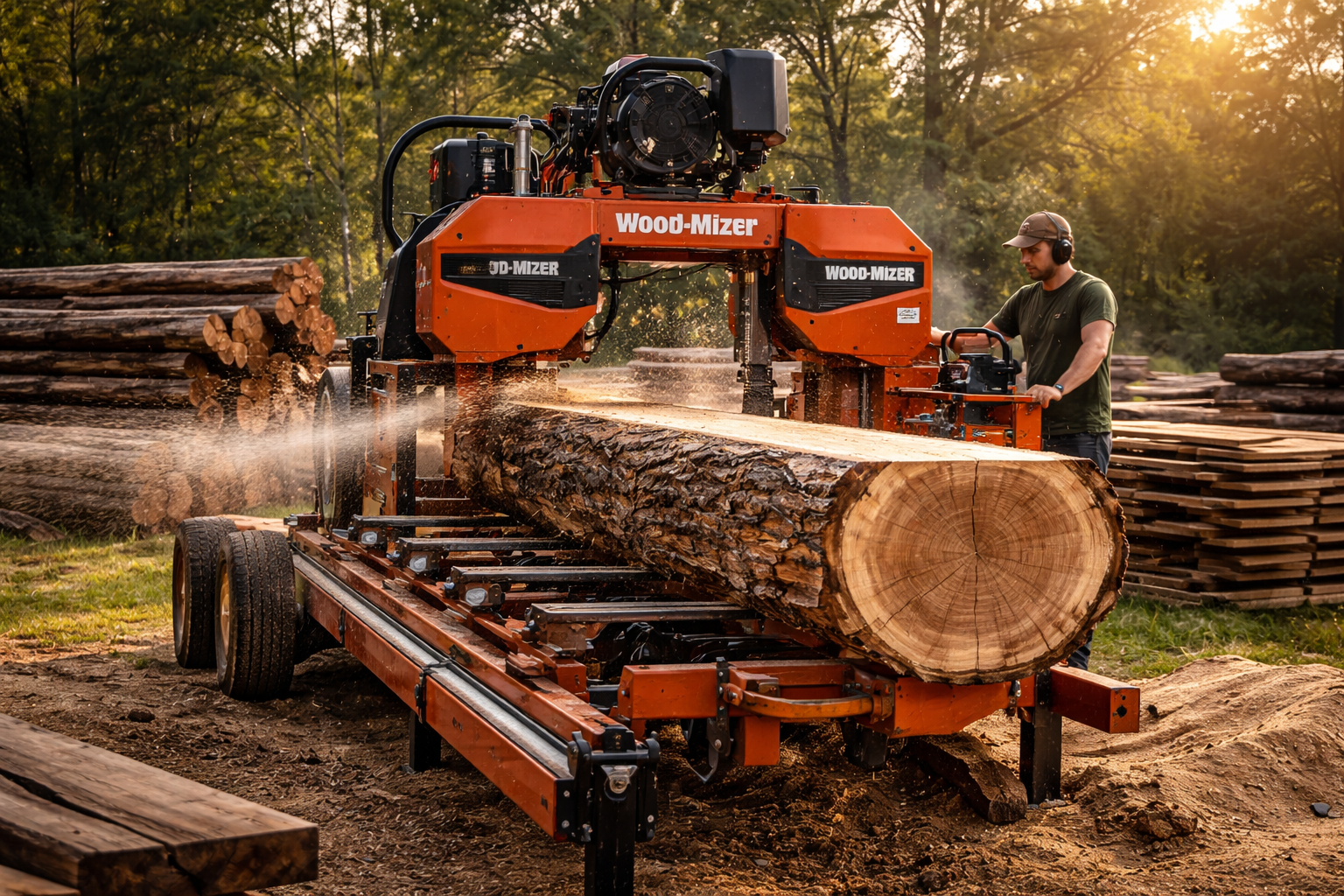
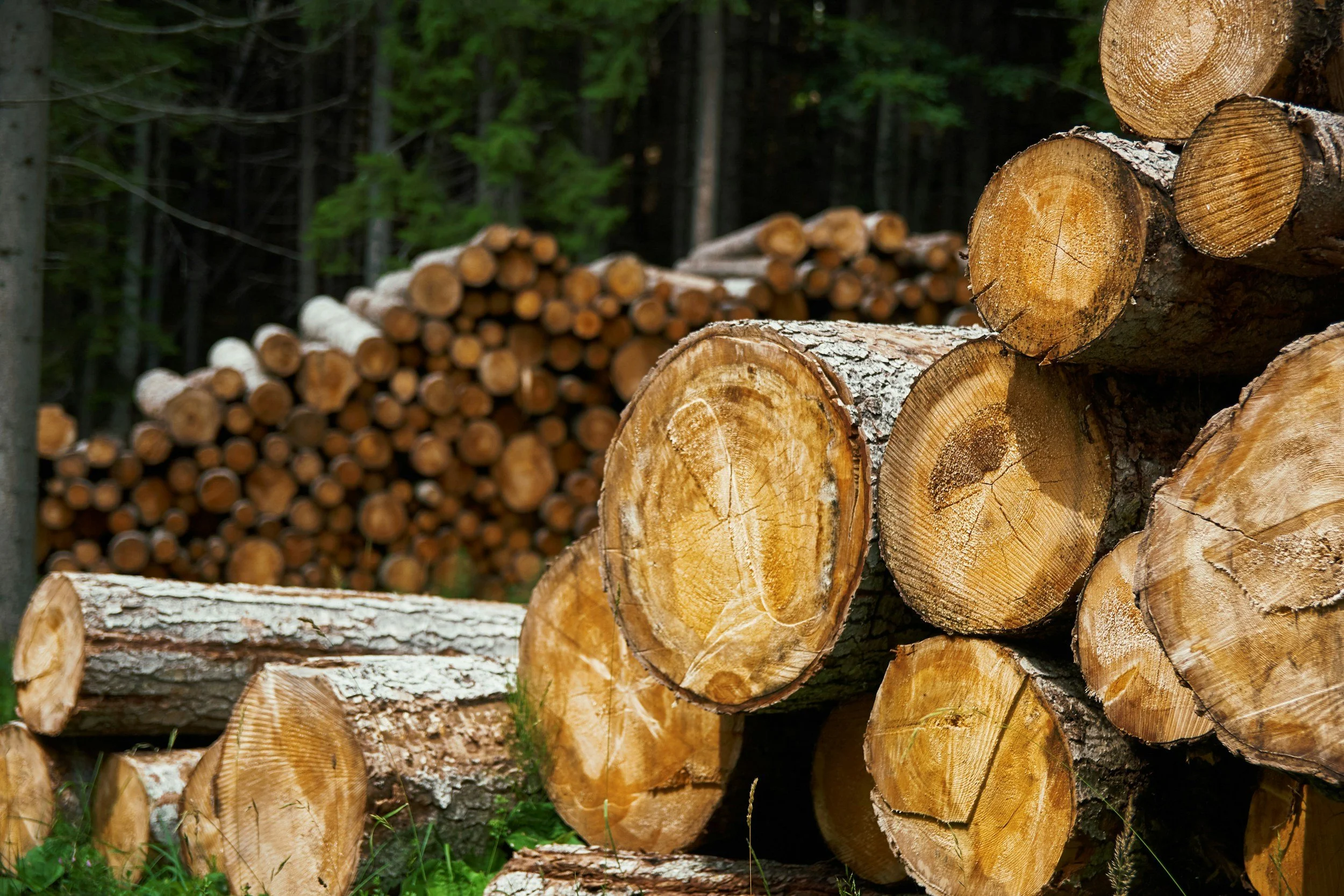
We offer top-quality wood milling services to the general public with our state-of-the-art sawmills. Turn your logs into usable lumber with our sawmill services at Stedman's Mill. Our sawmills can cut logs up to 36 inches in diameter.
Lumber Milling
Why the Sawmill Process Matters
The sawmill process ensures efficient use of natural resources by maximizing the amount of usable wood from each log. Modern sawmills also incorporate technology to reduce waste, improve safety, and enhance sustainability.
The Sawmill Process: From Log to Lumber
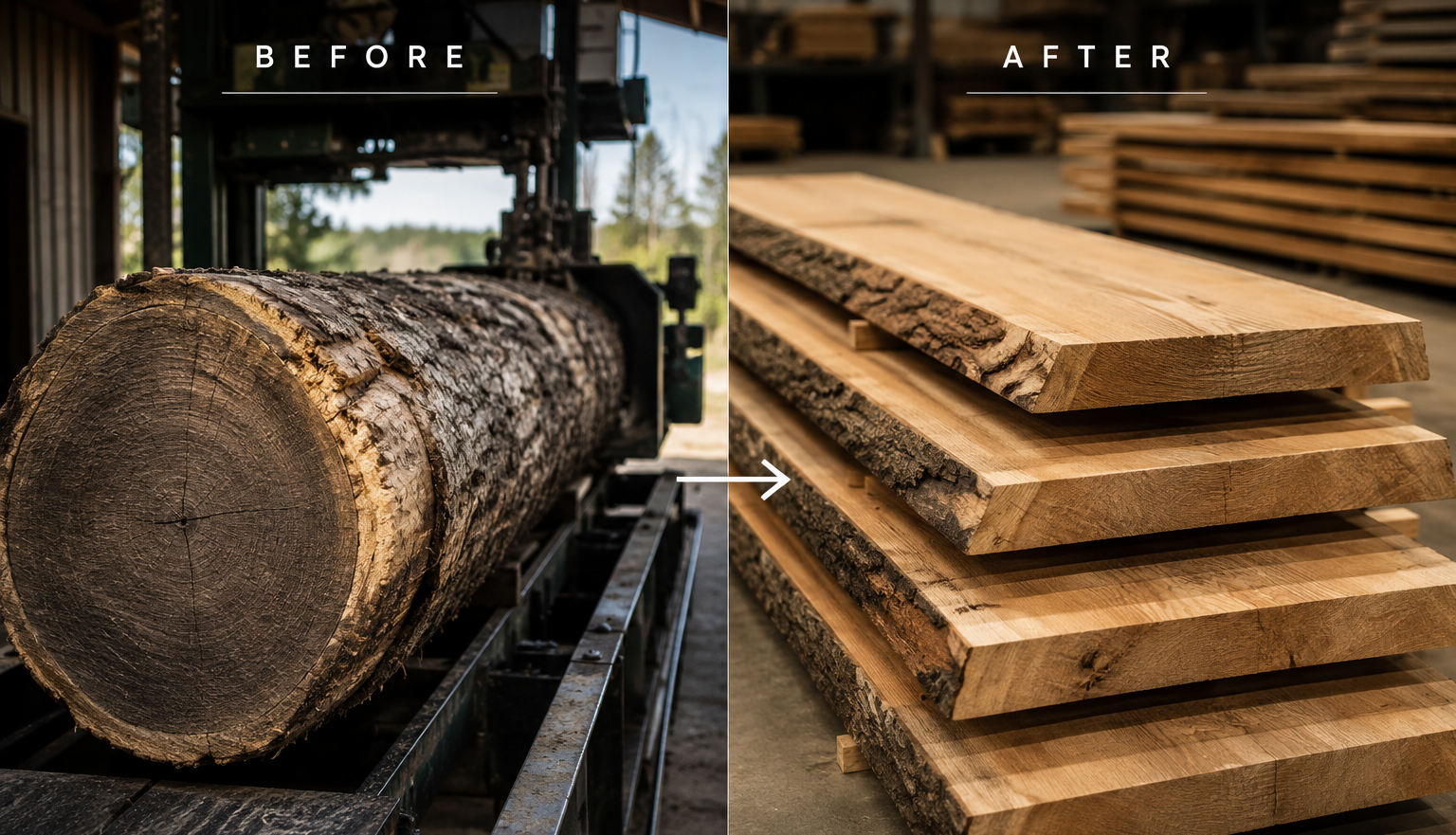
The sawmill process is a critical step in transforming raw timber into usable wood products. It combines mechanical precision, planning, and efficiency to convert logs into lumber used in construction, furniture, and more.
1. Log Harvesting and Transportation
The process begins in the forest, where trees are carefully selected and harvested. Once cut, logs are trimmed and transported to the sawmill, often by truck or rail. Proper handling during this stage ensures the logs remain intact and high quality.
2. Log Scaling and Inspection
At the sawmill, each log is measured and evaluated—a process known as scaling. Workers inspect logs for size, species, and defects such as knots or decay. This helps determine how the log will be cut to maximize yield and minimize waste.
3. Debarking
Before cutting begins, logs pass through a debarker, which removes the outer bark. This protects the saw blades from damage and ensures cleaner cuts.
4. Primary Breakdown (Sawing)
Logs are then cut into rough shapes using large saws, typically a head saw or band saw. This stage is called the primary breakdown, where logs are converted into large sections known as cants or flitches.
5. Secondary Breakdown
The cants are further processed into boards of specific sizes. This step involves additional saws that refine the wood into standard lumber dimensions, depending on its intended use.
6. Edging and Trimming
Boards often have uneven edges after sawing. Edgers remove irregular sides, while trimmers cut boards to uniform lengths. This ensures consistency and usability.
7. Drying (Seasoning)
Freshly cut lumber contains a high moisture content. It must be dried either through air drying or in a kiln. Kiln drying is faster and helps prevent warping, cracking, and fungal growth.
8. Planing and Finishing
After drying, lumber is planed to achieve smooth surfaces and precise dimensions. At this stage, the wood may also be graded based on quality and appearance.