
Live-Edge Kitchen Islands and Countertops: What Makes Wood Work in a Working Kitchen
There's a moment most homeowners have when designing a kitchen: they fall hard for a live edge wood slab, picture it as a stunning island or countertop, and then slowly talk themselves out of it. Water damage. Bacteria. Too much upkeep. They settle for quartz, tell themselves it's the practical choice, and quietly wonder what could have been.
Here's what's worth knowing: most of that hesitation is built on outdated assumptions, not actual performance data. A properly milled, kiln-dried hardwood slab with the right finish is durable, food-safe, and in many cases longer-lived than the stone alternatives people default to. The problem isn't wood. It's misinformation about what wood needs to perform well in a working kitchen.
This post works through all of it. You'll learn what kiln-drying actually does to a slab, why species selection matters more than most people realize, and why the finish you choose is really the whole decision. By the end, you won't just know whether wood works in a kitchen. You'll know exactly which wood works in yours.
Why So Many People Talk Themselves Out of Wood
Most of the fear around wood countertops doesn't come from wood. It comes from the wrong wood, prepared the wrong way, finished with whatever was on the shelf at the hardware store.
Spend ten minutes in any kitchen renovation forum and you'll find the horror stories. Warping. Blackening around the sink. A surface that looked gorgeous for six months and then started to buckle. What those stories almost never mention is what kind of wood it was, how it was dried, or what was used to seal it. That context is the whole story.
A lot of those cautionary tales trace back to softwoods, which have no business on a working kitchen counter. Others involve pre-finished butcher block from a big-box store, products that are built to a price point and finished with whatever sealer ships fastest. Some involve hardwood that was never kiln-dried, installed while it still held excess moisture, and finished with a product designed for something else entirely. These aren't failures of wood. They're failures of preparation.
Contractors who steer clients away from wood in kitchens often aren't drawing on experience with a properly milled, kiln-dried hardwood live edge slab. They're pattern-matching from things they've seen go wrong, which is reasonable, but it's also not the full picture. The same caution that comes from understanding why kiln-dried wood is non-negotiable for other furniture applications applies directly here: moisture content at installation is everything.
The gap between "wood fails in kitchens" and "this surface has looked better every year for fifteen years" is almost entirely explained by two things: species selection and how the wood was prepared before it was ever finished. That's it. Not some mysterious quality of the material itself.
So before weighing options or dismissing wood entirely, it's worth asking where the skepticism actually comes from. Secondhand caution has a cost too.
What Kiln-Drying Actually Does to a Hardwood Slab
Preparation is the whole story. And kiln drying is where preparation either happens or doesn't.
When a hardwood slab goes through a kiln, it loses moisture in a controlled way until it reaches roughly 6 to 8 percent moisture content. That number matters because it mirrors what wood naturally stabilizes to inside a climate-controlled home. The slab arrives at your kitchen already in balance with its environment. It has nowhere left to go. Kiln drying: why it matters more than you think is a concept worth understanding before any slab gets installed anywhere.
Air-dried wood is a different animal. Depending on where it was stored and for how long, air-dried lumber commonly holds 12 to 19 percent moisture. Put that material into a kitchen and it keeps moving. Steam from a boiling pot, a wet dishrag left on the surface, seasonal humidity swings in summer and winter. The wood expands and contracts against itself, against its finish, against the cabinet base below it. That's where cracks start. That's where cupping happens. The wood isn't failing because it's wood. It's failing because it was never stabilized before it was installed.
Kiln drying also cleans the wood in ways that matter for a food prep environment. The heat eliminates insects, larvae, and mold spores embedded in the grain. That's not a minor detail when the surface will be near food. It's part of why what kiln drying has to do with a table that does not warp applies just as directly to countertops as it does to furniture.
One more thing worth noting: properly dried hardwood handles thermal cycling better than most stone. Drop a heavy cast iron pan on granite or quartz and you're gambling. Dense, stabilized hardwood has enough give to absorb that kind of impact without fracturing.
At Stedman's, every slab going into a kitchen application is kiln dried to proper interior moisture content before finishing begins, whether it started as a customer's own log or a slab pulled from inventory. That single step is why the finished countertop behaves differently over time.
Most sources talking about live-edge kitchen surfaces jump straight to finish options and species comparisons. Those things matter, and they're coming. But the foundation underneath all of it is moisture content at the time of installation.
Species Matter More Than Most People Realize
Once you've got properly dried wood on the table, the next question is which wood. And this is where a lot of people make a costly mistake, treating species like a cosmetic choice when it's actually a structural one.
Black walnut is the species that comes up most often for live-edge kitchen islands, and for good reason. Its Janka hardness sits around 1,010 lbf, which handles daily cutting board collisions, dragged pots, and the general chaos of an active kitchen without collecting dents the way softer woods do. Its grain is tight, so moisture doesn't sneak in easily. The color, that deep chocolate-brown with warm undertones, doesn't fade over time. It gets richer. If you want to understand why walnut commands a premium, the characteristics that set it apart from other species go well beyond aesthetics.
White oak scores near 1,360 lbf, making it meaningfully harder than walnut. But the number isn't even its best trait. White oak contains natural tannins that actively resist moisture and inhibit fungal growth, which is a real advantage in a kitchen where wet conditions are constant. It's one of the more practical choices for any countertop that will see standing water, condensation, or regular cleaning.
Then there's pecan, which lands around 1,820 lbf. That makes it one of the hardest domestic hardwoods you can buy, and it shows. Pecan takes punishment. For high-traffic surfaces that see heavy daily use, few species compete with it on raw durability.
Hard maple reaches approximately 1,450 lbf and has been the standard for butcher block surfaces for generations. The reason isn't just hardness. Maple's grain is exceptionally dense and closed, which means it absorbs oil finishes evenly across the whole surface. It resists moisture penetration better than open-grain species and holds up to cutting without splintering.
Cedar belongs in a different category. It's softer, so it isn't the right call for active prep surfaces. What it does bring is natural oils and antimicrobial properties that make it worth considering for lower-traffic kitchen applications, open shelving, decorative panels, or an island side that isn't seeing daily knife work.
Here's the thing most guides skip: hardness alone doesn't determine how a wood slab live edge piece will perform over time. Grain structure matters just as much. A tight-grained species accepts finish more evenly, forms a more consistent barrier, and needs less frequent reapplication than a loose, open-grained wood. The finish has less raw surface area to protect.
Pick the wrong species for the job, and no finish in the world will save you from constant maintenance. That's the real source of most wood countertop horror stories. It wasn't the wood that failed. It was the mismatch between what the wood could do and what was asked of it.
The Finish Decision Is Really the Whole Decision
Pick the right species, and you've solved maybe half the problem. The other half is finish, and it's where most kitchen countertop decisions quietly fall apart.
The choice of finish determines how your surface holds up to moisture, how often you're maintaining it, and whether it's actually safe for food contact. Most homeowners don't have a clear framework for this. They pick something that sounds reasonable, or they go with whatever the installer recommends, and they end up either over-maintaining a surface that didn't need it or under-maintaining one that did.
Here's the core split: penetrating oils versus film-forming finishes. They behave completely differently, and they're suited to completely different use cases.
Food-Safe Oils: What They Do and What They Cost You
Tung oil, linseed oil, walnut oil, and mineral oil all soak into the wood rather than sitting on top of it. That's what makes them food-safe for direct food contact surfaces. There's no surface film to chip, peel, or leach into food. For any hardwood live edge slab being used as an active prep surface, this category is the right starting point.
The tradeoffs are real, though. Tung oil cures through oxidation and builds a water-resistant layer over time, but it needs reapplication every 6 to 12 months, with up to 30 days between coats during the initial build. Walnut oil cures to a hard satin finish and handles daily use well. Linseed oil runs on an annual or as-needed schedule. None of these are set-it-and-forget-it finishes. If the idea of a seasonal maintenance routine doesn't fit your life, that matters and it should factor into your decision before the slab is installed, not after.
You can find a deeper look at how these finishes behave on live-edge surfaces in this breakdown of how live edge furniture is finished.
Film-Forming Finishes: More Protection, Different Rules
Conversion varnish, polyurethane, and epoxy form a hard barrier on the surface rather than penetrating it. That barrier is significantly more resistant to water, scratches, and daily abuse than any penetrating oil. The maintenance burden drops considerably. For a live-edge kitchen island used as a serving area, bar surface, or decorative focal point, this category makes a strong case for itself.
The critical distinction: these finishes are not food-safe for surfaces where food is cut or prepared directly. They belong on islands that look beautiful and handle heavy use but aren't functioning as cutting boards.
Conversion varnish specifically earns a closer look. It's a professional-grade finish that holds up to moisture and daily traffic with minimal upkeep. If your island sees a lot of action but stays out of the direct prep zone, it's worth serious consideration.
When One Surface Needs Both
Many kitchen islands serve multiple functions simultaneously, part prep area, part serving surface, part visual anchor. A mixed finish strategy handles that well. Oil finishes in the active food prep zone, conversion varnish or epoxy on the waterfall edge and lower portions. Each area gets the protection that actually matches how it's used. It's not a compromise; it's a precise solution.
Thickness, Installation, and Managing Moisture the Right Way
Once you've locked in your finish choice, the next variable that actually moves the needle is how the slab is sized and put in.
Standard live-edge countertop thickness sits around 2.75 inches. That's enough mass to stay stable, enough depth for finish to penetrate properly, and light enough that standard cabinet bases can support it without reinforcement. For most kitchen countertops, it's a solid choice.
Islands are a different story. If your island sees heavy daily use, steaming pots, water pooling near the sink, and constant humidity swings, a slab in the 4 to 5 inch range earns its keep. More material means more capacity to absorb and release moisture gradually, which takes pressure off both the finish and the wood fibers underneath. Thick slabs move slower and recover better. That matters in a working kitchen.
Where failures actually start
Most wood countertop problems don't originate at the surface. They start underneath. A live edge wood slab installed directly over a cabinet base with poor airflow traps moisture between the wood and the cabinet. That trapped moisture works on the bottom face of the slab constantly, and no finish on earth protects the top if the underside is wet for months. Ventilation in the substrate isn't a detail. It's the difference between a countertop that lasts twenty years and one that warps in three.
Movement is manageable, not mysterious
Wood moves seasonally. It expands when humidity rises, contracts when the air dries out. This is predictable physics, not a defect. Let the slab sit in your kitchen for at least a week before the final installation. It needs to acclimate to the actual humidity and temperature of that specific room. When it's mounted, use hardware that allows minor expansion and contraction. A rigidly fixed slab fights its own movement. A properly mounted one accommodates it quietly.
The sink cutout needs special attention
Wherever your sink goes, that cutout edge is the highest-moisture point in the entire surface. Apply a marine-grade or epoxy barrier finish around the full perimeter of that opening, regardless of what finish you've used everywhere else. The grain exposed by the cutout wicks water faster than finished face grain. Seal it like it's going to see daily submersion, because effectively, it will.
Before your installer touches the slab, tell them it's kiln-dried to a specific moisture content and that movement allowances need to be part of the plan. If they look at you blankly, that's useful information. For a full breakdown of working with slab material from the start, How to Work With Live Edge Slabs covers the process in detail. Most cases labeled "wood countertop failure" are really installation failures. The wood did exactly what wood does. Nobody planned for it.
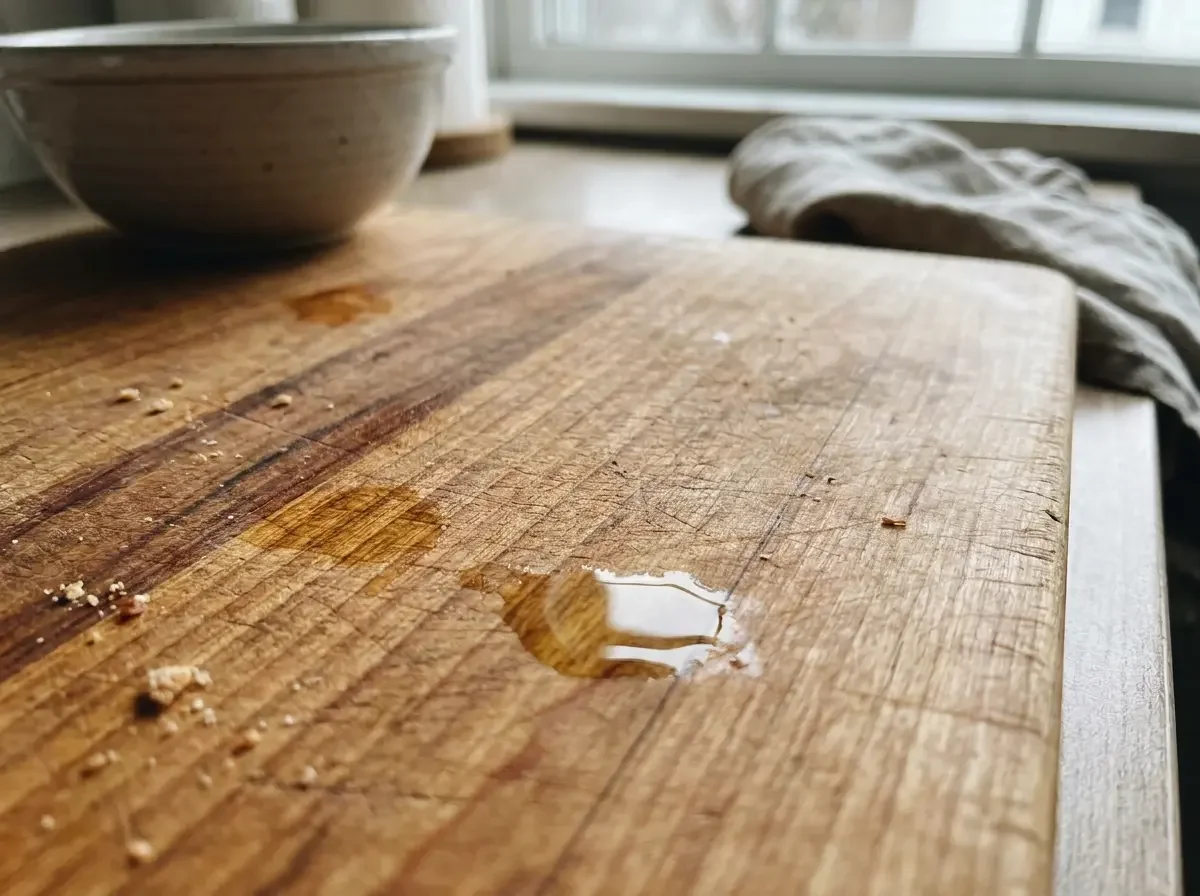
How Wood Actually Stacks Up Against Stone
So you've thought through installation, moisture management, and what your slab needs structurally. Now comes the comparison most people are quietly running the whole time: wood or stone?
The honest answer isn't a clean win for either side. Granite and quartz are genuinely hard, heat-tolerant, and essentially zero-maintenance on a day-to-day basis. Wood requires more attention. But here's what that framing misses: stone's weaknesses are permanent, and wood's almost never are.
Cost lands in the same neighborhood. Live-edge wood countertops run $95 to $500 per square foot depending on species, slab dimensions, and finish. Premium granite and quartz sit in that same range. The difference shows up in total cost of ownership. Wood asks for periodic maintenance; stone asks for nothing until something goes wrong. When something goes wrong with stone, you're typically calling a fabricator or replacing the slab entirely.
A deep chip or crack in granite is there forever without professional repair. A scratch in a properly finished hardwood slab? Sand it lightly, refinish the surface, done in an afternoon. That asymmetry matters more than most buyers realize at the start of the process.
Wood does lose on heat. A cast iron pan straight off the burner will scorch it. Trivets aren't optional; they're the rule. Stone handles direct heat without complaint. That's a real, legitimate advantage worth naming plainly.
But stone is brittle. A heavy impact, an awkward pot drop at the wrong angle, and a granite slab can crack clean through. That crack doesn't sand out. It doesn't refinish. Replacement is the only fix.
There are also qualities wood brings that don't appear on any spec sheet. It's warmer underhand. Dishes land quietly on it. Dropped glassware survives contact with wood far more often than it does with stone, and that matters when you're cooking and moving quickly in a busy kitchen.
The longevity argument ultimately favors properly maintained kiln-dried hardwood. Not because wood is harder than granite, but because a hardwood slab can be resurfaced, refinished, and essentially renewed over decades. Stone either holds or it doesn't. Once it's compromised, the surface is compromised for good. A well-maintained walnut or white oak countertop doesn't have that ceiling.
The Food Safety Question, Answered Plainly
Here's where wood gets unfairly dismissed, and the reason is almost always a finish problem, not a wood problem.
Butcher block has worked in professional kitchens and butcher shops for generations. Unfinished hardwood and pure penetrating oil finishes are food-safe for direct food contact. That's not a loophole or a workaround. It's just how wood has always worked when it's prepared correctly.
The actual concern traces back to film-forming finishes. Polyurethane, epoxy, and conversion varnish create a surface layer over the wood rather than soaking into it. That film is not meant for surfaces where food is cut or prepped directly. It can chip, harbor bacteria in micro-cracks, and introduce materials that have no business touching your food. Most general guidance on wood countertops skips this distinction entirely, which is why the fear spreads without the context attached to it.
The finish is what determines food safety. The wood itself isn't the problem.
A live-edge slab finished with food-grade tung oil or walnut oil is completely appropriate for normal kitchen use. Both penetrate the wood fibers rather than sitting on top of them. There's no film to crack or peel. Beyond that, research on dense hardwoods like maple suggests the wood actually traps and neutralizes bacteria more effectively than plastic cutting surfaces, which can harbor microbes in knife scores that cleaning doesn't fully reach.
The practical takeaway is simple. Know what finish is on your surface and what it was designed for. Use a cutting board on any film-finished island, regardless of material. Keep food-prep zones maintained with food-safe oil on a regular schedule, because an oil-finished surface that dries out starts to lose its protective properties.
The right answer also depends on how your kitchen actually gets used. A prep-heavy surface needs a different finish approach than a serving island or a display piece. That's exactly the kind of conversation the team at Stedman's has before a single cut is made.
From the Log to Your Kitchen: How Stedman's Approaches a Slab
Knowing what finish your slab needs is one part of the equation. Getting a slab that's actually ready to receive it is another, and that's where the process matters as much as the product.
Stedman's Mill and Lumber Co. processes logs up to 36 inches in diameter, milling live-edge slabs from black walnut, pecan, oak, cedar, and other Texas hardwoods. The species that perform best in kitchens, the ones covered earlier in this guide, aren't just available as dimensional boards. They're available as full slabs, natural edge intact, cut from the same regional hardwoods that have been used in Texas homes and commercial builds for generations.
Every slab headed for a kitchen application goes through kiln drying before any finishing begins. That step brings the wood to the moisture content appropriate for interior living spaces, typically in the 6 to 8 percent range. A slab that skips this arrives in your kitchen still holding onto moisture it will eventually release, and when it does, it moves. Kiln drying is what makes the difference between a countertop that performs for decades and one that starts showing stress in its first year.
Two paths lead to a finished kitchen slab at Stedman's. You can bring your own log, whether it's a tree from your property or salvaged timber with personal significance, and have it milled and kiln-dried from the start. Or you can choose from slabs already in inventory. Either way, the material arrives at the same place: properly prepared, stable, and ready for a kitchen environment. Their custom sawmill and lumber guides walk through what the milling process looks like if you're starting from a raw log.
Because Stedman's handles both the milling and the custom woodworking, finish selection enters the conversation before the slab is ever touched. The team that cut the wood is the same team finishing it. That continuity matters. Finish recommendations aren't made in isolation from the material; they're made with full knowledge of the species, the grain, and how the surface will actually be used.
If you're still in the planning phase, seeing the slabs in person is worth the trip. Grain movement, natural edge profiles, and the way color shifts across a walnut or pecan slab don't translate in photos. The physical slab changes how people make the decision, every time.
The Real Question Isn't Whether Wood Works, It's Which Wood
So here's where everything lands. Wood works in kitchens. That's settled. The real conversation is about which wood, prepared which way, finished for how you actually cook.
Every failure story you've heard traces back to a shortcut somewhere upstream: the wrong species, air-dried lumber that never stabilized, a finish mismatched to the surface's job. Properly kiln-dried hardwood, spec'd for the use case, consistently outperforms what most people expect from it. That's not a sales pitch. It's just what happens when preparation isn't skipped. If you want to go deeper on why moisture content at installation makes or breaks long-term performance, this breakdown of why kiln drying matters more than most people realize is worth a few minutes.
The decision framework is genuinely simple once you strip it down. Three variables: species hardness and grain density matched to how hard the surface will work; finish type matched to food prep or display function; slab thickness selected for the moisture that surface will actually see. Those three choices, made in the right order, answer almost every other question automatically.
Start with one question before anything else. Is this island for active food prep, or is it primarily a place people gather, serve, and set things down? That single answer reshapes everything. It determines whether you need a food-safe penetrating oil or a durable film finish. It tells you how hard your species needs to be. It informs thickness.
Then call the mill. Not the showroom, not the big-box lumber section. The people who milled the slab. They've watched specific species perform across specific kitchens, and a five-minute conversation can prevent a ten-year regret.
Conclusion
Wood works in a working kitchen. It has always worked. The difference between a slab that lasts decades and one that disappoints comes down to four decisions made with clear eyes: species matched to workload, finish matched to function, thickness matched to moisture exposure, and sourcing matched to accountability.
The post covered a lot of ground, but the core takeaway is genuinely straightforward. Skip the fear, respect the preparation, and treat the finish decision as seriously as the species selection. Those two choices carry most of the weight.
If you are ready to move from research to an actual slab, start by answering the prep versus gathering question, then bring that answer to the people who milled the wood. At Stedman's Mill, that conversation is free, and it changes everything. Reach out and start there.